

Pain behind the knee, in the area doctors call the popliteal fossa, is one of the more confusing knee complaints to sort out on your own. Unlike pain on the front or sides of the knee, this region is packed with tendons, a muscle, blood vessels, and nerves, so the same symptom can point to several very different problems. Most causes are mechanical and manageable. A small number need urgent attention. This guide walks through the most common reasons for posterior knee pain, what makes each one feel different, and when it is time to call a doctor rather than wait it out.
TL;DR: Pain behind the knee usually comes from a Baker’s cyst, meniscus tear, muscle or tendon strain, or osteoarthritis. Baker’s cysts alone are found in roughly a quarter of people evaluated for knee pain.1 Most causes improve with rest and activity changes, but sudden swelling, warmth, or calf pain should be checked by a doctor right away.
What Is Actually Located Behind the Knee?
The back of the knee is called the popliteal fossa, and it is bordered by the hamstring tendons above and the calf muscles below. Posterior knee pain is most often caused by knee joint fluid buildup, hamstring tendinitis, a Baker’s cyst, bursitis, or meniscal tears, while less common causes include popliteus or gastrocnemius tendinitis and irritation of the nerves that run through this space.2 Because so many structures sit close together, pinpointing the exact cause often requires a physical exam and sometimes imaging.
Knowing roughly where the pain sits, whether it is central, to the inside, or to the outside of the knee, can help a doctor narrow things down faster during your visit.
Baker’s Cyst: A Common Source of Posterior Knee Swelling
A Baker’s cyst, also called a popliteal cyst, is a fluid-filled sac that forms behind the knee and is one of the most frequent causes of posterior knee swelling. In adults, it typically develops between ages 35 and 70 and is commonly linked to osteoarthritis or a meniscus tear, since extra joint fluid gets pushed backward into the cyst.3 When it is symptomatic, the main complaint is a soft, palpable swelling behind the knee along with a vague, achy pain that worsens with bending.
Small Baker’s cysts often go unnoticed and never need treatment. Larger ones can restrict how far the knee bends or, rarely, rupture and cause calf swelling that mimics a blood clot, which is one reason self-diagnosis behind the knee is risky.
Meniscus Tears and Age-Related Wear
Meniscus tears are a leading mechanical cause of posterior and side knee pain, with an estimated incidence of 61 per 100,000 people in the general population.4 Two types exist: traumatic tears from a twisting injury, common in younger, active people, and degenerative tears that develop gradually with age, even without a specific injury.
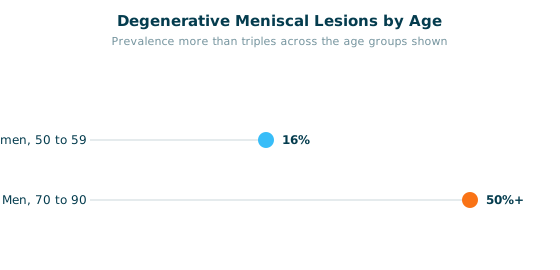
Degenerative meniscal changes are far more common than most people realize. Roughly 16% of women aged 50 to 59 already have degenerative meniscal lesions, and that figure passes 50% in men between 70 and 90 years old.5 Not every degenerative tear causes symptoms, which is why imaging alone does not always explain your pain.
Muscle and Tendon Strains Behind the Knee
The hamstring muscles cross both the hip and the knee, which makes them especially vulnerable to strain during sprinting, sudden direction changes, or overstretching.6 A hamstring strain typically causes sharp pain at the moment of injury, followed by tightness and bruising over the back of the thigh and upper knee.
A smaller, less familiar structure called the popliteus muscle can also be the source of the problem. It sits deep behind the knee, helps unlock the joint when you start to bend it, and can develop tendinopathy from overuse, especially downhill running or repetitive twisting. Popliteal tendon irritation has also been documented as an under-recognized cause of lingering pain after knee replacement surgery.7
Knee Osteoarthritis
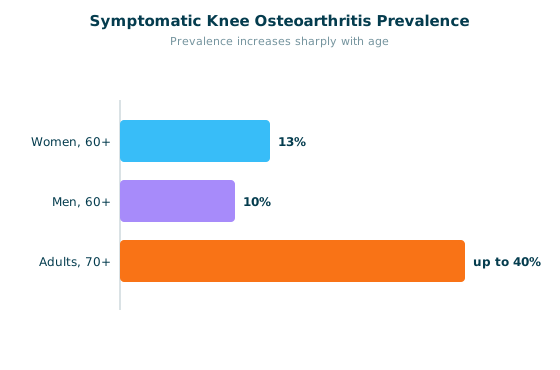
Osteoarthritis is the gradual breakdown of the cartilage that cushions the knee joint, and it is the most commonly diagnosed form of arthritis. Roughly 13% of women and 10% of men aged 60 and older have symptomatic knee osteoarthritis, and that number climbs to as high as 40% in adults over 70.8 As the joint wears down, extra synovial fluid can build up and get pushed into the back of the knee, which is why osteoarthritis and Baker’s cysts so often appear together.
Osteoarthritis pain tends to build gradually over months or years rather than appearing suddenly, and it is often worse after periods of rest, known as morning stiffness, and better once the joint warms up with light movement.
When Posterior Knee Pain Could Signal a Blood Clot
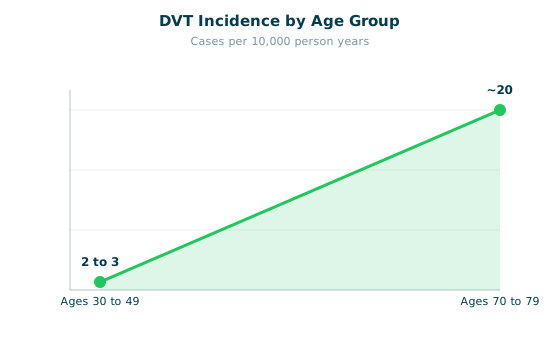
The rarest but most urgent cause of pain behind the knee is a deep vein thrombosis, or DVT, a blood clot that forms in the popliteal vein. DVT incidence rises steeply with age, from roughly 2 to 3 cases per 10,000 people per year between ages 30 and 49 to about 20 per 10,000 per year between ages 70 and 79.9 A clot behind the knee can also form without any obvious injury, which makes it easy to mistake for a muscle strain.
Unlike a strain or cyst, DVT symptoms typically include swelling, warmth, redness, and a heavy or aching sensation that does not improve with rest, sometimes extending down into the calf.10 The CDC estimates that as many as 900,000 people in the United States are affected by DVT or its complication, pulmonary embolism, each year, and roughly a quarter of pulmonary embolism cases have sudden collapse as the first noticeable symptom.11
Medical Treatment Options
Once a doctor has identified the actual cause of your posterior knee pain, treatment is usually matched to that specific diagnosis rather than a one-size-fits-all approach. For inflammation-related pain, such as from osteoarthritis or a strain, a doctor may recommend an oral anti-inflammatory. For pain involving nerve irritation, such as some cases of sciatica-related referred knee pain, a nerve-pain medication may be considered. General pain and fever can also be managed with standard over-the-counter analgesics under medical guidance.
Available Through PillsPlace
If your doctor prescribes a treatment plan for posterior knee pain, the following options are available through PillsPlace:
- Diclofenac tablets for prescribed anti-inflammatory pain relief
- Gabantin 300mg and Nervisign 300mg, both Gabapentin tablets used for prescribed nerve-related pain
- Calpol 650mg for general pain and fever relief as directed by a doctor
Always consult a doctor before use. These medications require a valid prescription and are not a substitute for a proper diagnosis.
When to See a Doctor
Most causes of pain behind the knee, such as a small Baker’s cyst, mild strain, or early osteoarthritis, respond well to rest, activity modification, and time. See a doctor if pain persists beyond two weeks, limits your ability to fully bend or straighten the knee, or is accompanied by visible swelling, warmth, redness, fever, or calf pain. A physical exam, and sometimes an ultrasound or MRI, can usually pinpoint the exact cause quickly.
Key Takeaways
- Posterior knee pain has several distinct causes, from Baker’s cysts and meniscus tears to muscle strains and osteoarthritis.
- Baker’s cysts and meniscus damage often occur together, especially in adults over 50.
- Sudden swelling, warmth, or calf pain should be evaluated urgently to rule out a blood clot.
- An accurate diagnosis from a doctor determines the right treatment path, rather than guessing based on symptoms alone.
If posterior knee pain is affecting your daily activity or has lasted more than a couple of weeks, a conversation with a healthcare provider is the most reliable next step toward relief.
FAQs.
Is pain behind the knee serious?
Can a Baker's cyst go away on its own?
Should I exercise with pain behind the knee?
What does a blood clot behind the knee feel like?
Can arthritis cause pain only behind the knee?
References
- National Institutes of Health (NIH), PMC. “Baker’s Cyst: prevalence in patients with knee pain.” PMC, 2022. View source
- Wachter S, Krause R, et al. “Deep posterior knee pain caused by a ganglion of the popliteus tendon, a case report.” PubMed, 1997. View source
- Leib AD, Roshan A, Foris LA, Varacallo MA. “Baker’s Cyst.” StatPearls, NCBI Bookshelf, NIH, 2023. View source
- National Institutes of Health (NIH). “Knee Meniscal Tears.” StatPearls, NCBI Bookshelf, 2023. View source
- National Institutes of Health (NIH). “Meniscectomy: prevalence of degenerative meniscal lesions by age and sex.” StatPearls, NCBI Bookshelf, 2023. View source
- National Institutes of Health (NIH). “Hamstring Injury.” StatPearls, NCBI Bookshelf, 2023. View source
- Finsterwald MA, Lu V, Andronic O, et al. “Popliteal tendon impingement as a cause of pain following total knee arthroplasty: a systematic review.” PMC, NIH, 2023. View source
- National Institutes of Health (NIH). “Knee Osteoarthritis: prevalence by age and sex.” StatPearls, NCBI Bookshelf, 2023. View source
- Fowkes FJ, Price JF, Fowkes FG. “Incidence of diagnosed deep vein thrombosis in the general population: systematic review.” PubMed, 2003. View source
- National Institutes of Health (NIH). “Deep Venous Thrombosis: presentation and evaluation.” StatPearls, NCBI Bookshelf, 2023. View source
- Centers for Disease Control and Prevention (CDC). “Data and Statistics on Venous Thromboembolism.” CDC, 2025. View source