If you have just started doxycycline and you are wondering when you will start feeling better, you are not alone. Waiting for an antibiotic to kick in can feel like the longest part of being sick, especially when symptoms like fever, pain, or discharge are making daily life hard.
The good news is that doxycycline tends to act fairly quickly once it reaches steady levels in your blood. But “starting to work” and “fully clearing the infection” are two different things, and mixing them up is one of the most common reasons people stop their medication too early.
This article walks through what actually happens in your body after your first dose, realistic timelines for different types of infections, and signs that mean it is time to check back in with your doctor.
TL;DR: Doxycycline usually reaches its peak blood level within 2 to 3 hours of a dose, and most people notice symptom improvement within 48 to 72 hours.8,3 Full recovery from the infection itself often takes the full prescribed course, typically 7 to 10 days.4 If symptoms are not improving after 3 days, speaking with a doctor is the most reliable next step.
How Quickly Does Doxycycline Enter Your Bloodstream?
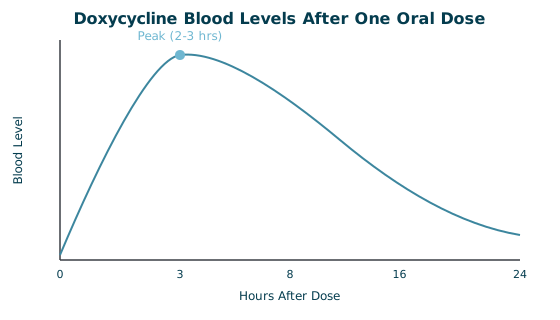
Doxycycline is absorbed quickly. After you swallow a dose, it reaches measurable levels in your blood within about 15 to 30 minutes, and the peak concentration, the highest amount circulating in your bloodstream, is typically reached within 2 to 3 hours.8 This is one reason doctors often choose doxycycline when they want an antibiotic that gets to work without much delay.
Doxycycline is a tetracycline-class antibiotic. It works by attaching to part of the bacteria’s internal machinery (the 30S ribosomal subunit) and blocking the bacteria from making the proteins they need to grow and multiply.1 It does not typically kill bacteria outright. Instead, it stops them from multiplying, which gives your immune system the chance to clear the remaining bacteria on its own.
Because doxycycline has a long elimination half-life of roughly 15 to 22 hours, it stays active in your system between doses, which is why most prescriptions only require taking it once or twice a day.8,16
When Should You Start Feeling Better?
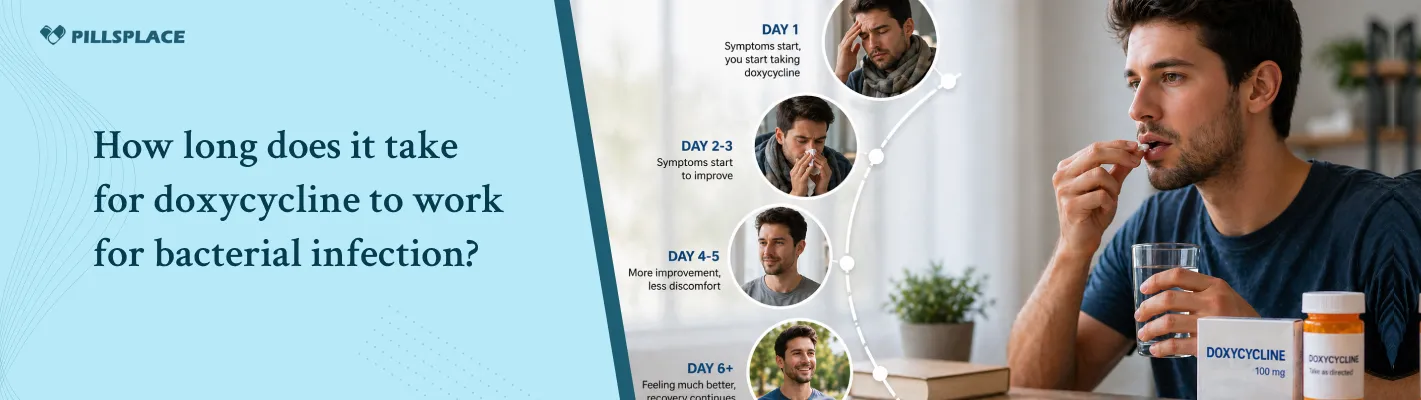
For most bacterial infections, people notice some improvement in symptoms like fever, pain, or discharge within 48 to 72 hours of starting doxycycline.3 This is often the first sign that the antibiotic is doing its job, even though the infection itself may not be fully gone yet.
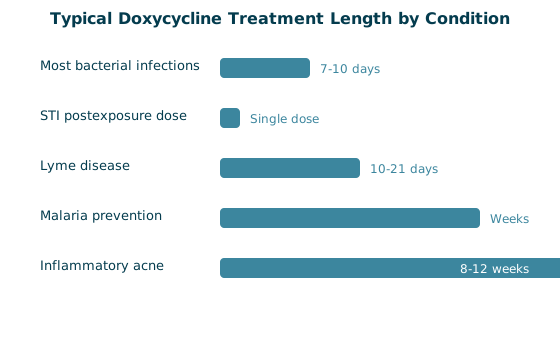
The exact timeline depends heavily on what is being treated. For urinary or genital infections, symptoms such as discharge or pain when urinating often start easing within about a week, while deeper pelvic discomfort can take up to two weeks to settle.2 For respiratory infections, improvement in fever and overall symptoms typically begins within 1 to 3 days once the bacteria stop multiplying.1
Some conditions take much longer by nature. Acne treated with doxycycline is evaluated over 8 to 12 weeks, with gradual improvement rather than a quick fix.1 Lyme disease symptoms can sometimes linger for weeks or months after the bacteria have been cleared, which can be confusing and worrying for patients who expect to feel “back to normal” right away.3
Why Finishing the Full Course Matters
Doctors typically prescribe doxycycline for 7 to 10 days for most bacterial infections, though the exact length depends on the type and severity of the infection.4 Even if symptoms improve within the first few days, the bacteria are not necessarily eliminated yet.
If treatment stops too early, the weaker bacteria die off first while some hardier bacteria may survive.21 These survivors can multiply again, sometimes causing the infection to return, and in some cases they become harder to treat with the same antibiotic the next time.19
It is worth being honest here: the science on “complete every course no matter what” has evolved. Some researchers argue that shorter courses can be just as effective for certain infections, and that the relationship between course length and resistance is more complex than older messaging suggested.23,25 What has not changed is the advice that patients should never adjust their own dose or stop early without talking to their prescriber first, since the right duration depends on the specific infection and how it responds.19
What If Doxycycline Does Not Seem to Be Working?
If you do not notice any improvement within about 48 to 72 hours, or if your symptoms are getting worse rather than better, it is reasonable to contact your doctor.3 This does not automatically mean something is seriously wrong. A few different things could be going on.
Sometimes the bacteria causing the infection are resistant to doxycycline, meaning the drug cannot effectively stop them from multiplying.3 Other times, the infection may not be bacterial at all, antibiotics do not work on viral infections, so if a virus is the actual cause, doxycycline will not help. Absorption issues, such as taking doxycycline with dairy or certain supplements, can also reduce how much of the drug actually gets into your bloodstream.12
None of these situations mean you did anything wrong. They are simply part of how infections and medications work, and they are exactly the kind of thing your doctor can reassess with a follow-up visit, additional testing, or a change in treatment.3
Medical Treatment Options
Doxycycline is one of several antibiotics doctors may prescribe depending on the type and location of a bacterial infection. The right choice depends on the specific bacteria involved, the site of infection, and individual patient factors that only a healthcare provider can assess.
Antibiotic Options Available Through PillsPlace
If a doctor has prescribed an antibiotic for a bacterial infection, the following options are available through PillsPlace. Always consult a doctor before use and only take antibiotics that have been prescribed for your specific condition.
- Doxycycline 100mg, a tetracycline-class antibiotic commonly used for respiratory, skin, and certain sexually transmitted infections.
- LQuin 750mg (levofloxacin), a fluoroquinolone antibiotic sometimes used for more severe or resistant bacterial infections when prescribed by a doctor.
- Cephadex 500mg (cephalexin), a cephalosporin antibiotic often used for skin, soft tissue, and certain respiratory infections.
- Tinidazole, an antiparasitic and antibacterial medication used for specific infections such as bacterial vaginosis and certain protozoal infections, as directed by a doctor.
Antibiotic choice and dosage should always be guided by a licensed healthcare provider based on test results and individual health history.
Conclusion
Doxycycline tends to act quickly once it reaches your bloodstream, often easing symptoms within 48 to 72 hours for many common bacterial infections. But quick relief is not the same as a finished job. The full course, usually 7 to 10 days, gives your body the best chance to fully clear the infection.
Key points to remember:
- Doxycycline peaks in the blood within 2 to 3 hours of a dose
- Symptom improvement often begins within 1 to 3 days
- Different infections have very different timelines, from days to weeks
- Lack of improvement after a few days is worth discussing with a doctor
- Never stop or adjust an antibiotic course without medical guidance
If you have questions about your specific symptoms, timeline, or whether your current treatment is working as expected, your doctor or pharmacist is the best person to ask.
FAQs.
How soon will I feel better after starting an antibiotic?
Can I stop taking my antibiotic once I feel fine?
What if my symptoms get worse on antibiotics?
Does food affect how well an antibiotic works?
Why do some infections take weeks to clear?
References
- National Center for Biotechnology Information. “Doxycycline mechanism of action, pharmacokinetics, and clinical use.” StatPearls, 2025. View source
- UK Meds. “Symptom improvement timelines for doxycycline in common bacterial infections.” UK Meds Health Blog, 2024. View source
- Ubie. “Expected improvement timelines and warning signs while taking doxycycline hyclate.” Ubie Doctor’s Note, 2026. View source
- Medical News Today. “Doxycycline dosage and standard treatment duration for bacterial infections.” Medical News Today, 2026. View source
- Centers for Disease Control and Prevention. “Clinical guidelines on doxycycline for bacterial STI prevention.” MMWR, 2024. View source
- DailyMed, U.S. National Library of Medicine. “Doxycycline hyclate tablets prescribing information and pharmacokinetics.” DailyMed, FDA label data. View source
- Holmes, Natasha E. and Charles, Patrick G.P. “Safety and efficacy review of doxycycline.” Clinical Medicine Insights: Therapeutics, 2009. View source
- Mountain Care Pharmacy. “Why finishing antibiotics matters for preventing resistance and reinfection.” Mountain Care Pharmacy, 2025. View source
- MedReport Foundation. “Why completing an antibiotic course supports treatment and reduces resistance risk.” MedReport, 2026. View source
- National Center for Biotechnology Information. “Re-examining advice to complete antibiotic courses: a qualitative study with clinicians and patients.” PMC, 2023. View source
- Llewelyn, Martin J. et al. “Complete the antibiotic course to avoid resistance: non-evidence-based dogma which has run its course.” The BMJ, peer-reviewed analysis. View source