Lower back pain has a way of stopping you mid-task, whether you’re reaching for a coffee mug or trying to stand up after sitting too long. The good news is that most cases are not dangerous, and there are specific, research-backed steps that can ease pain within hours, not weeks.
This guide walks through what actually works for fast relief, what doesn’t help as much as people assume, and when it’s time to call a doctor instead of waiting it out.
TL;DR: Most acute lower back pain improves with heat therapy combined with gentle movement, not bed rest.1 Staying active speeds recovery more than resting does, and over-the-counter pain relievers can help in the short term. If pain lasts more than a few days or comes with numbness, speaking with a doctor is the most reliable next step.
Why Does My Lower Back Hurt So Much?
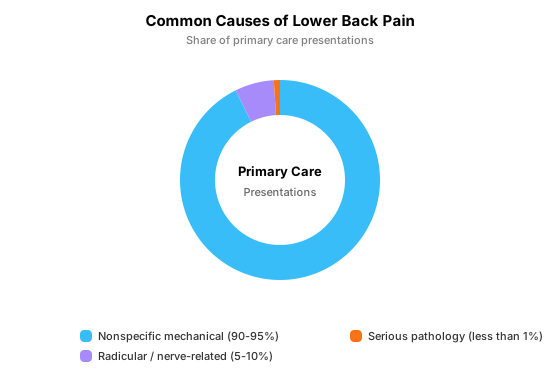
Lower back pain affected an estimated 619 million people worldwide in 2020, making it the leading global cause of years lived with disability.2 The vast majority of cases, around 90 to 95 percent, are classified as nonspecific, meaning there’s no single structural cause doctors can pinpoint on a scan.
Most pain originates from the soft tissue around the spine: muscles, ligaments, and the small facet joints between vertebrae. A sudden movement, an awkward lift, or hours of poor posture can irritate these structures enough to trigger a spasm. That spasm is often what people feel as the sharp, locked-up sensation in the lower back.
It’s worth knowing that pain intensity doesn’t always match tissue damage. A muscle strain can feel just as severe as something more serious, which is exactly why the next section on red flags matters before trying any home remedy.
What Relieves Lower Back Pain Fastest?
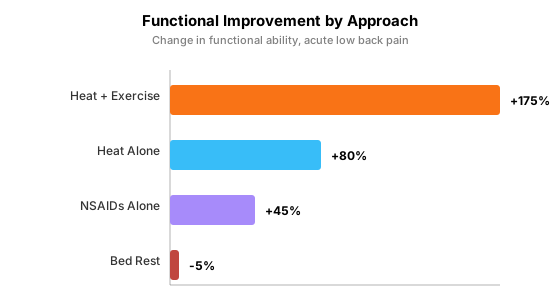
Heat therapy combined with light movement is currently the best-supported approach for fast relief in acute lower back pain.1 A randomized controlled trial found that combining continuous low-level heat with exercise improved functional ability by up to 175 percent compared to a control group, with 72 percent of participants returning to pre-injury activity levels.
Here’s a realistic look at what to try first, in order of how quickly each method tends to work:
1. Apply Heat, Not Bed Rest
Heat works by relaxing tight muscles and increasing blood flow to the area, which can ease the spasm that’s driving the pain. A Cochrane-style review of low-back-pain trials found moderate evidence that a heat wrap applied for eight hours, or an electric blanket used for 25 minutes, both outperformed no heat treatment for short-term pain relief.3
Bed rest, on the other hand, has shown low-quality evidence of being ineffective and may actually slow recovery by stiffening the muscles further.4 The instinct to lie down completely still is understandable, but staying gently mobile is what the evidence actually supports.
2. Keep Moving Within Your Pain Limit
Avoiding all activity out of fear of “making it worse” is one of the most common mistakes people make. Clinical guidelines consistently recommend staying as active as the pain allows, since prolonged inactivity is linked to a higher chance of pain becoming chronic.5
Walking, light stretching, and everyday movement (not strenuous exercise) are typically encouraged from day one. The goal isn’t to push through sharp pain, but to avoid the trap of total stillness.
3. Try Over-the-Counter Anti-Inflammatories
NSAIDs (nonsteroidal anti-inflammatory drugs, a class of medication that reduces swelling and pain) have shown a modest but real benefit for acute lower back pain in multiple randomized trials.6 The effect size is described as moderate rather than dramatic, so NSAIDs work best as one part of a broader approach rather than a stand-alone fix.
Interestingly, acetaminophen (paracetamol) has not held up as well in research. A large randomized trial of over 1,600 patients found acetaminophen performed no better than placebo for time to recovery in acute lower back pain.7 If you’ve reached for it without much relief, the research suggests you’re not imagining it.
How Long Does Lower Back Pain Usually Last?
Most episodes of acute lower back pain improve substantially within 2 to 6 weeks, with many people feeling significant relief within days of starting heat and movement-based care.8 However, research shows that 62 percent of people still report some pain at the 12-month mark, and between 2 and 34 percent of acute cases go on to become chronic.
This wide range reflects how much individual factors, like activity level during recovery and how early appropriate care begins, shape the outcome. It’s a reasonable question to ask: does waiting it out actually help, or does it just delay the inevitable need for a different approach?
When Should I Worry About Lower Back Pain?
Most lower back pain is not an emergency, but certain symptoms point to something that needs same-day or immediate medical attention.9 These are called red flags, and they apply regardless of how the pain started.
Seek urgent care if lower back pain comes with any of the following:
- New loss of bladder or bowel control, or difficulty starting urination
- Numbness in the groin, inner thighs, or saddle area
- Sudden weakness or numbness in one or both legs
- Fever, chills, or pain following a recent infection
- Back pain after a significant fall or trauma
- A history of cancer combined with new, unexplained back pain
These signs can point to cauda equina syndrome (compression of the nerve bundle at the base of the spine), a spinal infection, or a fracture, all of which require prompt evaluation rather than home treatment.9
Medical Treatment Options
When home care isn’t cutting it, a doctor may recommend prescription-strength options tailored to how the pain is behaving. Below is an overview of common categories, not a recommendation for any single product.
Network meta-analyses comparing pharmacological treatments found that skeletal muscle relaxants were the only drug class that significantly reduced pain intensity in acute lower back pain when compared across dozens of trials.10 NSAIDs combined with muscle relaxants have also shown faster pain reduction than either approach alone in clinical trials measuring relief within the first few hours.11
Prescription and OTC Options Worth Discussing With Your Doctor
If heat, movement, and over-the-counter relief aren’t enough, your doctor may walk you through options such as muscle relaxants, prescription-strength NSAIDs, or short-term combination therapy. PillsPlace carries several options that a licensed provider might consider as part of a treatment plan, including:
- Prosoma 350mg (carisoprodol), a centrally acting skeletal muscle relaxant used short-term for acute muscle spasm
- Carisoprodol 350mg, the same active compound used to relieve discomfort from acute musculoskeletal conditions
- Flexura 400mg, a muscle relaxant formulation sometimes used alongside anti-inflammatory therapy
- Diclofenac tablets, an NSAID studied for inflammation and pain relief in acute back pain
- Calpol 500mg (paracetamol), an option some patients use for general pain management alongside other care
Always consult a doctor before use. These medications carry specific dosing limits, interactions, and risks, including dependence potential with certain muscle relaxants, and should only be used under medical supervision.
Carisoprodol is approved for up to three weeks of use and carries a risk of dependence, since one of its metabolites is itself a controlled substance.12 This is exactly why short-term use under medical guidance, rather than open-ended self-treatment, is the standard recommendation.
Can Stretching and Posture Changes Help?
Targeted stretching and posture adjustments may support recovery, though the research base here is less robust than for heat and movement.8 Gentle stretches that decompress the lower spine, like the knee-to-chest stretch or a gentle cat-cow movement, are commonly recommended by physical therapists as part of a broader recovery plan.
Posture matters more during prolonged sitting than most people realize. Slouched sitting increases pressure on the lumbar discs, and small adjustments, like keeping the hips slightly higher than the knees, can reduce the strain that builds up over a workday.
Key Takeaways
- Heat combined with gentle movement is the best-supported fast-relief method for acute lower back pain
- Bed rest tends to slow recovery rather than help it
- NSAIDs offer modest relief, while acetaminophen has shown little benefit in trials
- Most cases improve within weeks, but red flag symptoms need same-day medical attention
- Prescription options exist for cases that don’t respond to home care, but they require medical guidance
Lower back pain is frustrating, but it’s rarely a sign of something catastrophic. Combining the right first steps with patience, and knowing when to escalate to a doctor, gives most people a clear path back to normal movement.
FAQs.
What is the fastest way to relieve lower back pain at home?
Is it better to rest or stay active with lower back pain?
Should I use heat or ice for lower back pain?
When should I see a doctor for lower back pain?
Does acetaminophen help with lower back pain?
References
- Mayer JM, et al. “Treating acute low back pain with continuous low-level heat wrap therapy and/or exercise: a randomized controlled trial.” Journal study on heat wrap therapy outcomes, 2005. View source
- Global Burden of Disease Collaborators. “Global, regional, and national burden of low back pain, 1990-2020, and projections to 2050.” Systematic analysis published via PMC, 2023. View source
- Cochrane Collaboration. “Superficial heat or cold for low back pain.” Systematic review, PMC, 2006 (review record). View source
- Systematic review authors. “Interventions available over the counter and advice for acute low back pain: systematic review and meta-analysis.” PubMed, 2014. View source
- StatPearls Authors. “Low Back Pain: Evaluation and Management.” NCBI Bookshelf, National Institutes of Health, last updated December 2025. View source
- Cochrane Collaboration. “Non-steroidal anti-inflammatory drugs for acute low back pain.” Systematic review, PMC. View source
- Williams CM, et al. “Paracetamol is ineffective for acute low back pain even for patients who comply with treatment.” PubMed, complier average causal effect analysis, 2019. View source
- Clinical trial protocol authors. “Effect of thermal therapy and exercises on acute low back pain: a protocol for a randomized controlled trial.” BMC Musculoskeletal Disorders, 2020. View source
- Multiple specialty sources synthesized from StatPearls and clinical guidance. “Red flag symptoms in low back pain requiring urgent evaluation.” NCBI Bookshelf, National Institutes of Health. View source
- Frontiers in Pharmacology. “Comparative Efficacy of Pharmacological Therapies for Low Back Pain: A Bayesian Network Analysis.” Frontiers journal, 2022. View source
- Clinical trial authors. “A Double-Blind Randomized Active-Controlled Trial Evaluating Diclofenac and Thiocolchicoside Combination in Acute Low Back Pain.” PMC, 2025. View source
- StatPearls Authors. “Carisoprodol.” NCBI Bookshelf, National Institutes of Health. View source