

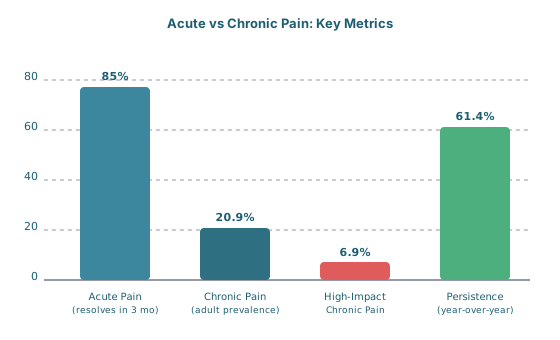
Chronic pain affects an estimated 51.6 million adults and remains one of the most common reasons people seek medical care. Yet it is frequently mismanaged because patients and providers sometimes treat it the same way they treat Chronic and Acute, which does not work. This guide explains how the two types differ, what causes each, and what your treatment options look like.
In Short: Acute pain is a short-term warning signal triggered by tissue injury, while chronic pain persists beyond three months and often involves nervous system changes. According to the CDC, roughly 20.9% of adults live with chronic pain. The two conditions require different treatment strategies. If your pain has lasted more than a few weeks without improvement, speaking with a doctor is the most important next step.
What Is Acute Pain and What Causes It?
Acute pain starts suddenly and acts as a biological alarm. It tells your body something has gone wrong, whether that is a fracture, a burn, an infection, or a surgical wound. According to the National Institute of Neurological Disorders and Stroke, acute pain typically resolves when its underlying cause is treated or healed.
The nervous system response in acute pain is predictable. Your body releases stress hormones, your muscles may tighten, your heart rate rises, and you feel an urgent, often sharp sensation. All of this is normal. It is your nervous system doing its job.
Common causes of acute pain include:
- Muscle strains and sprains
- Broken or fractured bones
- Post-surgical recovery
- Dental procedures
- Burns and cuts
- Infections causing tissue inflammation
- Childbirth
Importantly, acute pain is self-limiting. Once the tissue heals, the pain signal stops. This is why treatment focuses on managing discomfort during recovery rather than long-term symptom control.
What Is Chronic Pain and How Is It Different?
Chronic pain is defined as pain that persists for more than three months, either beyond the expected time of healing or without any identifiable cause. A 2025 NIH StatPearls review confirms that chronic pain often involves maladaptive neuroplasticity, meaning the nervous system itself has changed in ways that sustain the pain signal even when no ongoing tissue damage is present.
This is the key distinction. Acute pain is a symptom. Chronic pain is often a disease in its own right. It can disrupt sleep, affect mood, impair relationships, and reduce a person’s ability to work or enjoy daily life. Research published in PMC shows that chronic pain affects more than 30% of the global population, making it one of the leading causes of disability worldwide.
Chronic pain may arise from:
- Untreated or inadequately treated acute pain
- Conditions such as osteoarthritis, rheumatoid arthritis, or fibromyalgia
- Nerve damage (neuropathic pain) from diabetes, shingles, or injury
- Inflammatory diseases
- Persistent psychological stress that amplifies pain signals
- Cancer-related pain
- Unknown causes (idiopathic chronic pain)
Side-by-Side: How Acute and Chronic Pain Differ
The table below summarizes the most clinically meaningful differences between the two types of pain. Understanding where your pain fits can help guide a conversation with your doctor.
| Feature | Acute Pain | Chronic Pain |
|---|---|---|
| Duration | Up to 3 months | More than 3 months |
| Primary cause | Injury, surgery, infection | Nerve damage, inflammation, or unknown |
| Nervous system role | Normal nociceptive signaling | Central sensitization, neuroplastic changes |
| Biological purpose | Protective warning signal | No recognized protective purpose |
| Resolution | Resolves with healing | Persists beyond healing timeframe |
| Mental health impact | Mild to moderate, short-term | Depression, anxiety often co-occur |
| Treatment approach | Target cause, short-term relief | Multidisciplinary, long-term management |
How Pain Transitions from Acute to Chronic
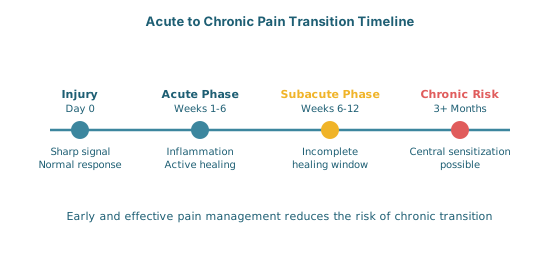
Not all acute pain becomes chronic, but a subset does. A 2025 review in Current Opinion in Psychology found that the transition from acute to chronic pain is driven by a combination of biological, psychological, and social factors, not by the original injury severity alone.
On a biological level, repeated pain signals can cause the spinal cord and brain to become overly sensitive. This process is called central sensitization. Once it occurs, the nervous system may interpret normal touch or movement as painful, a feature seen in conditions like fibromyalgia.
Risk factors that increase the likelihood of this transition include:
- Inadequate early pain control
- Pre-existing anxiety or depression
- Social isolation or poor support systems
- High-stress occupational demands
- Sleep disturbances that impair tissue recovery
- Genetic predispositions to heightened pain sensitivity
Diagnosing Each Type of Pain
A doctor evaluating pain will first want to understand its timeline. Pain that starts sharply after an identifiable event and improves over days is usually acute. Pain that has lasted weeks without clear improvement, or that appears unrelated to any recent injury, raises the possibility of a chronic process.
Standard assessments may include:
- Visual analog scales or numerical pain rating tools
- Physical examination to locate tenderness and restricted movement
- Imaging such as X-ray or MRI to detect structural damage
- Blood tests to rule out inflammatory or autoimmune conditions
- Nerve conduction studies when neuropathic pain is suspected
- Psychological screening for depression, anxiety, and sleep disorders
Medical Treatment Options
Treatment for acute pain and chronic pain follows different principles. Chronic and Acute management focuses on targeting the cause and providing short-term relief. Chronic pain management typically requires a combination of medications, physical therapy, psychological support, and lifestyle adjustments.
For Acute Musculoskeletal Pain
NSAIDs (non-steroidal anti-inflammatory drugs) such as diclofenac are widely used for acute pain because they reduce both inflammation and pain at the injury site. A 2025 systematic review in PMC found that diclofenac combined with a muscle relaxant showed meaningful benefit for acute low back pain over short treatment durations. Acetaminophen (paracetamol) at standard doses is another common first-line option for mild to moderate acute pain. Skeletal muscle relaxants may be added for acute pain with significant muscle spasm.
For Chronic and Neuropathic Pain
Gabapentinoids such as gabapentin bind to voltage-gated calcium channels in the nervous system, reducing the overactive signaling that characterizes neuropathic pain. A 2025 meta-analysis in Frontiers in Pain Research confirmed that both gabapentin and pregabalin are effective in managing neuropathic pain, with improvements in pain scores and sleep quality. A 2023-2024 clinical chart review found that nearly 30% of chronic pain patients in a pain clinic were managed with gabapentinoids.
Medical Treatment Options Available at Pillsplace
Pillsplace offers a range of medications commonly used under medical supervision for pain management. These include:
- Pain O Soma 350mg (Carisoprodol 350mg) – a skeletal muscle relaxant used short-term for acute musculoskeletal pain relief
- Diclofenac Tablets – an NSAID used for inflammation and pain associated with musculoskeletal conditions
- Calpol 500mg (Paracetamol) – a standard analgesic for mild to moderate pain and fever
- Gabantin 300mg (Gabapentin 300mg) – used under prescription for neuropathic and chronic pain management
Always consult a doctor before use. These medications require professional guidance to determine correct dosing, duration, and suitability for your specific condition.
Multidisciplinary Approaches for Chronic Pain
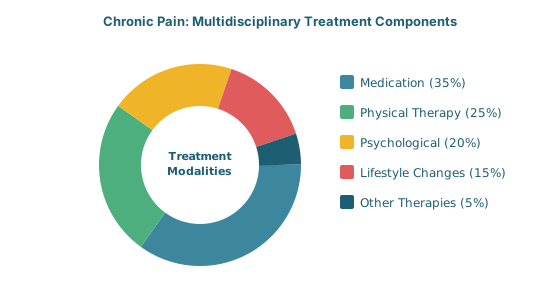
A landmark PubMed review notes that effective chronic pain therapy must involve more than one therapeutic modality. This typically includes physiotherapy to restore movement, cognitive-behavioral therapy (CBT) to address pain catastrophizing, sleep hygiene programs, and in some cases low-dose antidepressants that modify pain processing pathways. Relying solely on medication for chronic pain without addressing the psychological and functional dimensions often produces limited results.
When to See a Doctor
Acute pain that is mild and linked to a minor injury, like a small bruise or mild muscle pull, often resolves on its own with rest, ice, and over-the-counter pain relief. However, you should seek prompt medical attention if:
- Pain is severe or getting worse instead of better
- Pain follows a head injury, chest trauma, or abdominal injury
- Pain is accompanied by fever, swelling, or signs of infection
- Pain has lasted more than four to six weeks without improvement
- Pain limits your ability to walk, sleep, or carry out normal tasks
- You suspect your acute pain may be entering a chronic phase
Conclusion
Acute and chronic pain are not just the same experience at different volumes. They involve different mechanisms, different treatments, and different implications for your overall health. Acute pain is a short-term warning that something needs attention. Chronic pain is a condition that requires sustained, often multi-layered management.
Knowing which type of pain you are dealing with is the first step toward getting the right help. If your pain has lasted more than a few weeks, is disrupting your sleep, mood, or daily functioning, or keeps returning without explanation, a doctor’s evaluation is the most important action you can take. You do not have to accept persistent pain as a normal part of life.
FAQs.
How long does acute pain typically last?
Can acute pain turn into chronic pain?
Is chronic pain always caused by an injury?
What medications are used for chronic pain management?
When should I see a doctor for pain?
References
- Rikard SM, Strahan AE, Schmit KM, Guy GP Jr. “Chronic Pain Among Adults, United States, 2019-2021.” CDC MMWR, 2023. View source
- National Institute of Neurological Disorders and Stroke. “Pain.” NIH NINDS, March 2026. View source
- Rosenblum A, Marsch LA, Joseph H, Portenoy RK. “The difference between acute and chronic pain.” PubMed, 1991. View source
- Al Khalili Y, Jain S, Mneimneh WS. “Pain Assessment.” StatPearls, NIH NCBI, June 2025. View source
- De La Rosa JS, Brady BR, Ibrahim MM, et al. “Clinical Diagnosis and Treatment of Chronic Pain.” PMC, 2023. View source
- Linton SJ, Nicholas MK. “Understanding the individual’s transition from acute to chronic disabling pain.” Current Opinion in Psychology, 2025. View source
- Grace PM, Hutchinson MR, Maier SF, Watkins LR. “The transition from acute to chronic pain: understanding how different biological systems interact.” PubMed, 2014. View source
- Oikonomou I, Akinosoglou K. “Efficacy and Safety of the Combination of Diclofenac and Thiocolchicoside in the Treatment of Low Back Pain.” PMC Healthcare, March 2025. View source
- Ghlichloo I, Gerriets V. “Nonsteroidal Anti-Inflammatory Drugs (NSAIDs).” StatPearls, NIH NCBI, 2023. View source
- Mayoral V, Galvez R, Ferrandiz M, et al. “Pregabalin vs. gabapentin in the treatment of neuropathic pain: a comprehensive systematic review and meta-analysis.” Frontiers in Pain Research, January 2025. View source
- Aurora RN et al. “Prescribing Patterns of Gabapentinoids in Chronic Pain Management: A Single Institution Retrospective Chart Review.” PubMed, January 2025. View source