
You wake up with a fever, a sore throat, and that heavy feeling that tells you something is wrong. Most people reach for an antibiotic at this point. But here is the thing: antibiotics only work on bacteria. If a virus is causing your illness, taking an antibiotic does absolutely nothing except harm the balance of your gut and contribute to one of medicine’s biggest global crises.
The challenge is that Bacterial Infection vs Viral Infection can feel nearly identical in the first 24 to 48 hours. Fever, fatigue, body aches, and a runny nose do not reliably point to one cause over the other. Yet getting the treatment right matters more than most people realize.
This article explains exactly how these two types of infection differ, what the science says about telling them apart, and when medical treatment is the right next step.
In short: Bacterial and viral infections cause overlapping symptoms, but only bacterial infections respond to antibiotics. According to WHO data from 2025, one in six bacterial infections globally is already resistant to standard antibiotic treatment. Self-diagnosis is unreliable. If symptoms persist beyond 10 days or worsen significantly, speaking with a doctor is the most reliable next step.
What Is the Actual Difference Between Bacteria and Viruses?
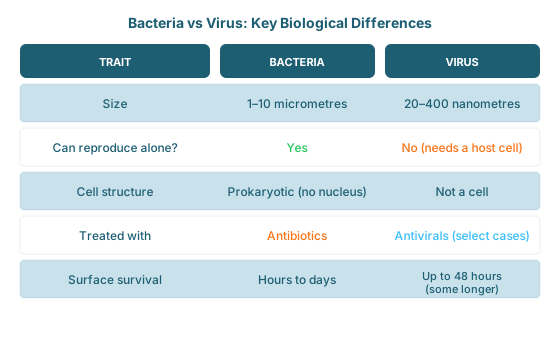
Bacteria are living, single-celled organisms with their own cellular machinery. They can reproduce independently, survive in a wide range of environments, and cause infection by releasing toxins or invading tissue directly. They have existed on Earth for roughly 3.5 billion years.
Viruses are fundamentally different. They are not technically alive in the way bacteria are. A virus is a small package of genetic material wrapped in a protein coat. It cannot reproduce on its own. Instead, it hijacks the cells in your body and forces them to make copies of itself. This is why antibiotics have no effect on viral infections: bacteria have cell walls and metabolic processes that antibiotics can target, while viruses do not.
This structural difference is the entire reason treatment differs so dramatically between the two. Understanding it helps explain why a doctor might not prescribe anything for what feels like a severe cold, while prescribing a specific antibiotic for a milder-sounding ear infection.
Do They Feel the Same? Overlapping and Distinct Symptoms
Both types of infection activate your immune system, which is why the symptoms can feel identical at first. Fever, fatigue, muscle aches, headache, and a general sense of feeling unwell are common to both. These symptoms are not caused by the infection itself so much as by your body’s immune response fighting back.
That said, some patterns do lean more toward one or the other over time.
| Symptom Pattern | More Likely Bacterial | More Likely Viral |
|---|---|---|
| Onset speed | Often sudden, localized | Gradual, diffuse |
| Fever pattern | High, persistent (above 38.5°C) | Low to moderate, often self-limiting |
| Mucus/discharge | Yellow or green, thick | Clear or watery early on |
| Duration without treatment | Does not improve or worsens | Typically 7 to 14 days, then resolves |
| Body aches | Usually mild unless septic | Often prominent (especially flu) |
| Rash | Possible (strep, Lyme) | Possible (chickenpox, measles) |
One important pattern to understand: a viral illness can sometimes lead to a secondary bacterial infection. For example, a cold caused by a virus can weaken the respiratory tract, making it easier for bacteria to take hold and cause sinusitis or pneumonia. In that case, symptoms first improve, then suddenly worsen again around day 7 to 10. This is one of the clearer clinical signals that a bacterial infection has developed on top of a viral one.
How Do Doctors Actually Tell Them Apart?
Symptoms alone are not reliable enough to make a confident diagnosis. A 2025 study published in PMC involving 173 patients found that combining white blood cell count, neutrophil count, monocyte count, and CRP (C-reactive protein, a marker of inflammation) achieved a specificity of 89.3% for distinguishing bacterial from viral respiratory infections. That is a meaningful result, but it still means roughly one in ten cases could be misclassified using blood tests alone.
Here is what the clinical picture typically looks like:
Markers That Point Toward Bacterial Infection
Elevated white blood cells (WBC above 11 x 109/L), elevated CRP (often above 40 mg/L), high neutrophil count, procalcitonin above 0.5 ng/mL, and a positive bacterial culture from swab or blood sample. A 2024 PMC study using machine learning on 44,120 cases found that combining these blood parameters achieved diagnostic accuracy of 82.2%, outperforming CRP alone.
Markers That Point Toward Viral Infection
Normal or mildly elevated WBC, low procalcitonin, elevated lymphocyte count relative to neutrophils, and negative bacterial cultures. Some viruses like influenza and COVID-19 can cause higher CRP levels than typical viral infections, which is why context and clinical judgment remain essential.
Rapid antigen tests and PCR swabs are also used for specific viruses (influenza, COVID-19, RSV) and bacterial infections (strep throat). These give faster results than culture-based methods and are particularly useful when treatment decisions need to be made quickly.
A doctor cannot reliably tell from a quick look whether your infection is bacterial or viral. Blood tests, sometimes cultures, and the full picture of your symptoms over several days are what make the call reliable. This is why getting tested matters before starting any antibiotic.

Why Antibiotic Resistance Makes This More Important Than Ever
This is not a theoretical concern. In October 2025, the World Health Organization released its Global Antibiotic Resistance Surveillance Report showing that one in six laboratory-confirmed bacterial infections worldwide in 2023 were already resistant to standard antibiotic treatments. Between 2018 and 2023, antibiotic resistance rose in more than 40% of the bacteria-drug combinations being monitored, with an average annual increase of 5 to 15%.
WHO also estimates that antibiotic-resistant bacteria were directly responsible for 1.27 million deaths in 2019 alone, and contributed to nearly 5 million deaths globally. Without meaningful change, the economic burden of resistant infections could exceed $3 trillion annually.
Every unnecessary antibiotic prescription adds pressure to this crisis. When antibiotics are taken for viral infections, they kill beneficial gut bacteria, create selective pressure for resistant organisms to survive and spread, and accomplish nothing against the actual infection. This is not an argument against antibiotics. It is an argument for using them correctly, with a confirmed bacterial diagnosis and an appropriate prescription.
Common Bacterial Infections and What Typically Causes Them
Not all bacterial infections are the same, and the type of bacteria determines which antibiotic is appropriate. Here are the most commonly encountered bacterial infections in clinical practice:
Respiratory Tract Infections
Streptococcus pneumoniae is among the most common causes of bacterial pneumonia and acute sinusitis. Haemophilus influenzae is frequently implicated in bronchitis and ear infections. Strep throat is caused by Group A Streptococcus pyogenes and typically presents with severe throat pain, fever, and white patches on the tonsils without a cough (a cough generally suggests a viral cause).
Urinary Tract Infections (UTIs)
Escherichia coli (E. coli) accounts for roughly 80% of uncomplicated UTIs. Other common culprits include Klebsiella pneumoniae and Staphylococcus saprophyticus. UTIs are one of the most common bacterial infections experienced by women globally, and resistance to first-line antibiotics in UTI pathogens now exceeds 30% in most countries, according to the 2025 WHO surveillance report.
Skin and Wound Infections
Staphylococcus aureus and Streptococcus species are responsible for most skin infections including cellulitis and impetigo. Methicillin-resistant Staphylococcus aureus (MRSA) represents a growing concern because it requires alternative antibiotic choices and can be difficult to treat in hospital settings.
Common Viral Infections and How the Body Handles Them
Viruses cause the majority of upper respiratory infections that people experience every year. The common cold alone results in millions of missed workdays annually. Most viral infections resolve on their own as the immune system mounts a response and produces antibodies.
Common viral infections include influenza (flu), which can cause high fever and significant muscle aches for 5 to 7 days; the common cold, caused by rhinoviruses and typically mild; COVID-19 (SARS-CoV-2); viral gastroenteritis (stomach flu caused by norovirus or rotavirus); and herpes family viruses including chickenpox and shingles.
For most viral infections, supportive care is the recommended approach: rest, adequate fluids, fever management with over-the-counter medications if needed, and monitoring for signs of worsening. Antiviral medications do exist for specific viruses such as influenza (oseltamivir), COVID-19 (nirmatrelvir/ritonavir in eligible patients), and herpes infections. However, these are prescribed based on specific clinical criteria, not given routinely.
Medical Treatment Options for Confirmed Bacterial Infections
When a doctor confirms a bacterial infection through examination and appropriate testing, several antibiotic options may be prescribed depending on the type and severity of infection. The following medications are available at PillsPlace. Always consult a doctor before use.
Ciprofloxacin 500mg
Fluoroquinolone for urinary, GI, and respiratory bacterial infections.
PillsPlace supplies prescription antibiotics for confirmed bacterial infections. A valid prescription is required.
When Should You See a Doctor?
Not every infection requires a clinic visit, but some signs indicate it is time to get medical attention without delay. Waiting too long with a bacterial infection can allow it to spread from a localized area into the bloodstream, which is a condition called sepsis and can become life-threatening.
See a doctor promptly if any of the following are present: fever above 39°C (102.2°F) that does not come down with over-the-counter medication; symptoms that start improving then suddenly worsen after day 5 to 7; severe localized pain, especially in the throat, ear, or chest; difficulty swallowing or breathing; skin that is red, warm, swollen, and spreading; symptoms that have not improved after 10 full days; or any high fever in an infant, elderly person, or immunocompromised individual.
A rapid test, throat swab, urine test, or blood panel can often give a clinician a clear answer within hours. The short wait for results is always better than taking an antibiotic that may not work or may cause harm.
Conclusion
Bacterial and viral infections are genuinely hard to distinguish by symptoms alone, especially in the first 24 to 72 hours. Both cause fever, fatigue, and discomfort. But they respond to very different treatments, and using the wrong one has real consequences for your health and for global antibiotic effectiveness.
The most reliable path is a medical evaluation with appropriate testing when symptoms are significant, persistent, or worsening. Self-treating with antibiotics without a confirmed bacterial cause contributes to resistance patterns that affect everyone. Supportive care, rest, and hydration remain the correct first response for most viral illnesses.
If you have been diagnosed with a bacterial infection and need access to appropriate prescription antibiotics, PillsPlace provides reliable options with physician consultation support. Your health decisions deserve accurate information and proper guidance.
FAQs.
Can antibiotics treat a viral infection?
How do doctors distinguish a bacterial infection from a viral one?
When do symptoms last longer than expected?
Is antibiotic resistance a real risk from taking the wrong antibiotic?
What should I do if I think I have a serious infection?
References
- World Health Organization. “Global Antibiotic Resistance Surveillance Report 2025.” WHO GLASS, October 2025. View source
- Kasper DL, et al. “Bacterial and viral infection differences: structural and biological overview.” Harrison’s Principles of Internal Medicine; also referenced via MedlinePlus, NIH. View source
- Duke Health / Staples B. “Is it a Bacterial Infection or Virus?” Duke Health Patient Education, 2024. View source
- Zhou Y, Xu L, Zhong X, et al. “Differentiating bacterial from viral respiratory tract infections using CRP, SAA, and blood routine parameters.” PMC / Clinics Sao Paulo, November 2025. View source
- Brezan M, et al. “Differentiating viral and bacterial infections: A machine learning model based on routine blood test values.” Heliyon / PMC, April 2024. View source
- UN News. “Antibiotic resistance surges globally, UN health agency warns.” Citing WHO GLASS 2025 data, October 2025. View source
- McCarty JM. “Azithromycin: approved indications and clinical pharmacology.” PMC / Infectious Disease Symposium, 1996. View source
- National Institutes of Health / NCBI. “The Global Burden of Multidrug-Resistant Bacteria.” PMC, 2025. View source
- MedlinePlus / NIH. “Antiviral Drugs.” National Library of Medicine. View source