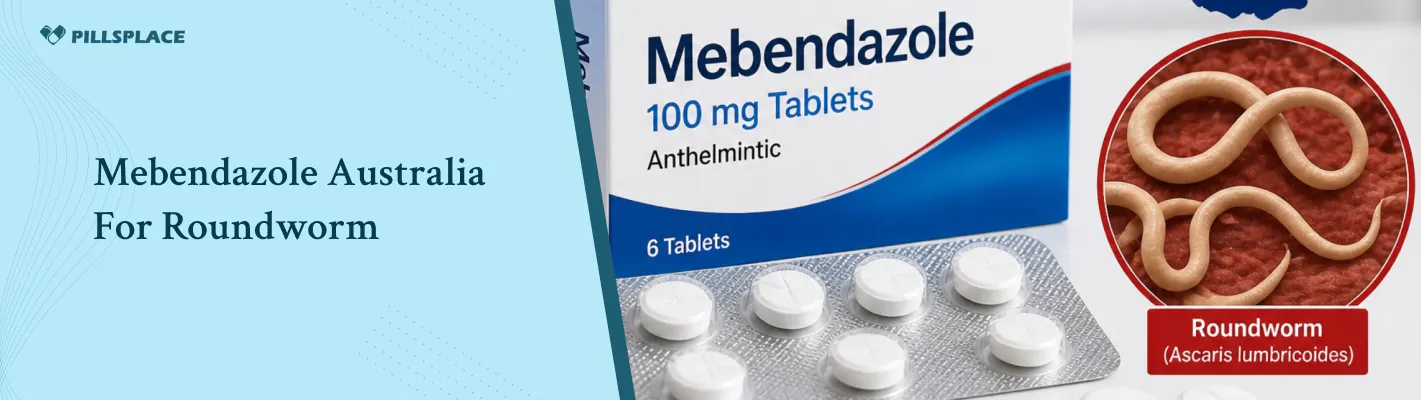
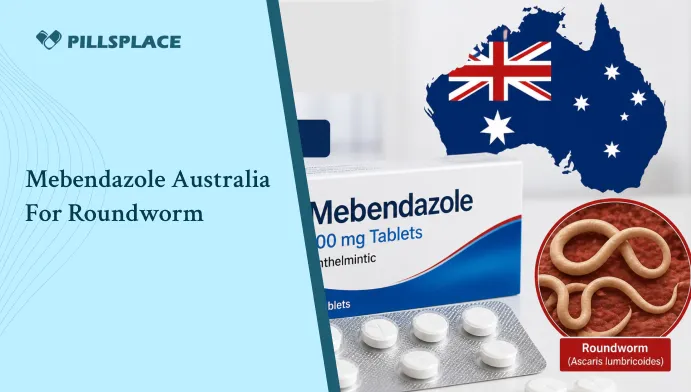
Finding out you have roundworm can feel alarming, especially if you spotted something unusual in your stool or your child’s doctor mentioned it after a stool test. The good news is that roundworm, medically known as ascariasis, is one of the most treatable parasitic infections that exists. Mebendazole is one of the standard medicines doctors use to clear it, and for most people it works quickly with minimal side effects.
This guide explains what roundworm is, how mebendazole clears the infection, what dosage doctors typically prescribe, and what you can realistically expect during treatment.
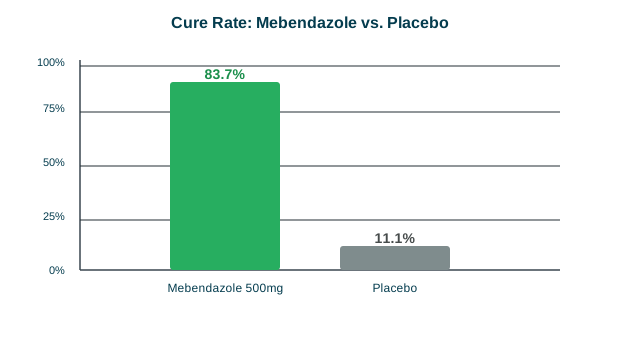
TL;DR: Mebendazole treats roundworm by blocking the parasite’s ability to absorb glucose, causing it to die and pass out of the body. In a randomized trial, a single 500 mg dose cleared eggs in 83.7% of infected patients within three weeks.5 If symptoms persist after treatment, speaking with a doctor is the most reliable next step.
What Is Roundworm and How Common Is It?
Roundworm, or ascariasis, is an intestinal infection caused by a parasite called Ascaris lumbricoides. It spreads when a person accidentally swallows microscopic eggs from soil, food, or water that has been contaminated with infected stool. Once swallowed, the eggs hatch into larvae, travel through the lungs, and eventually mature into adult worms living in the small intestine.
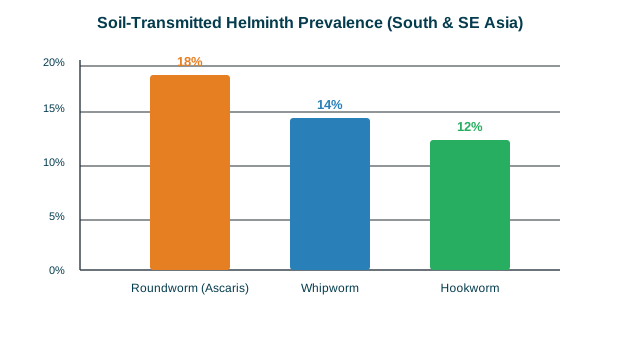
Globally, an estimated 682 to 782 million people were infected with ascariasis in 2021, making it one of the most common parasitic infections in the world.1 The CDC places the number even higher, estimating 772 to 892 million cases worldwide.2 Children between the ages of 5 and 15 carry the highest burden of infection, largely because of hand-to-mouth contact with contaminated soil.1
Most people with a light infection have no symptoms at all. When symptoms do appear, they usually include mild abdominal discomfort, nausea, or in some cases a dry cough as larvae pass through the lungs. Heavier infections can occasionally cause more serious blockages, which is why testing and proper treatment matter.
How Does Mebendazole Treat Roundworm?
Mebendazole works by blocking the worm’s ability to absorb glucose, its main energy source.7 Without glucose, the worm’s cells gradually run out of energy, and the worm dies over the following days. The dead worm is then passed out of the body naturally in the stool, which is why doctors do not expect you to see anything alarming during treatment beyond normal bowel movements.
Because mebendazole targets the worm’s metabolism rather than acting on human cells the same way, it is generally well tolerated. It is also active against several other intestinal worms besides roundworm, including whipworm, hookworm, and pinworm, which is useful since mixed infections are common in endemic areas.7
What Is the Standard Mebendazole Dosage for Roundworm?
According to NIH clinical guidance, the standard mebendazole dose for roundworm is 100 mg taken twice daily, in the morning and at night, for three consecutive days.3 Some clinicians instead prescribe a single 500 mg dose, which research shows produces comparable results.4
| Regimen | Dose | Duration |
|---|---|---|
| Standard course | 100 mg, twice daily | 3 consecutive days |
| Single-dose alternative | 500 mg, once | Single dose |
If symptoms or a positive stool test persist three weeks after treatment, a second course is generally recommended.3 A large randomized, placebo-controlled trial found that a single 500 mg dose cleared roundworm eggs in 83.7% of patients, compared with just 11.1% in the placebo group.5 The same trial found the treatment reduced egg counts by 97.9% on average, a strong signal that the medicine is doing what it is meant to do.5
What Side Effects Should You Expect?
Mebendazole is generally considered low risk when taken as directed. Reported side effects are usually mild and can include stomach discomfort, diarrhea, or headache.6 Serious reactions are uncommon. Because mebendazole is a prescription medicine in most countries, your doctor will also check for interactions with anything else you are taking before you start.9
It is worth being honest about where the evidence stands. Mebendazole’s cure rate for roundworm is strong, but some studies note it performs slightly less consistently than albendazole for certain related infections such as whipworm.10 This does not make it a weaker choice for roundworm specifically, but it is one reason your doctor may choose one antiparasitic over another depending on which worm is involved.
When Might a Doctor Also Prescribe an Antibiotic?
Roundworm itself is a parasite, not a bacterium, so mebendazole and similar antiparasitic medicines are the actual treatment. Antibiotics are not a substitute for antiparasitic therapy. That said, doctors sometimes prescribe an antibiotic alongside antiparasitic treatment in specific situations, such as a secondary bacterial infection, a mixed intestinal infection involving protozoa, or complications like biliary tract involvement. These decisions are always made case by case after proper testing.
Related Treatment Options Available at PillsPlace
If your doctor identifies a secondary bacterial infection, a mixed parasitic and protozoal infection, or another related condition alongside roundworm, the following prescription options are available through Pillsplace. These are not substitutes for antiparasitic therapy and should only be used under medical guidance.
- Cephadex 500mg (cephalexin) is a commonly prescribed antibiotic for certain secondary bacterial infections. Always consult a doctor before use.
- LQuin 750mg (levofloxacin) may be prescribed for specific bacterial infections when a doctor determines it is appropriate. Always consult a doctor before use.
- Doxycycline 100mg is an antibiotic sometimes used for a range of bacterial infections as directed by a physician. Always consult a doctor before use.
- Tinidazole is an antimicrobial medicine used for certain protozoal and anaerobic bacterial infections, and is available for patients in Australia through a valid prescription. Always consult a doctor before use.
A prescription and medical consultation are required before ordering any of these medicines. Self-treating a parasitic infection without confirming the diagnosis is not recommended.
How Can Roundworm Infection Be Prevented?
Prevention centers on breaking the soil-to-mouth cycle that spreads roundworm eggs in the first place. Simple habits make a meaningful difference, especially for households with children or anyone handling soil regularly.
- Wash hands with soap before eating and after using the toilet or handling soil
- Wash and peel or cook raw fruits and vegetables grown in soil-fertilized areas
- Avoid drinking water from sources that may be contaminated with sewage
- Practice safe disposal of human waste, especially in areas without reliable sanitation
Public health programs built around exactly these habits have shown real results. A national deworming and sanitation campaign in Uganda reduced average prevalence from 60% to 8.8% between 2004 and 2016, showing how much impact consistent prevention efforts can have over time.2
Key Takeaways
- Roundworm is a soil-transmitted parasite affecting hundreds of millions of people worldwide, most commonly children
- Mebendazole works by cutting off the worm’s glucose supply, causing it to die and pass naturally
- The standard dose is 100 mg twice daily for 3 days, or a single 500 mg dose
- Retesting after three weeks helps confirm the infection has fully cleared
- A doctor’s evaluation is the only reliable way to confirm diagnosis and choose the right treatment
If you suspect roundworm or another intestinal parasite, a stool test from a healthcare provider is the clearest way to confirm it and get the right treatment plan started.
FAQs.
Can roundworm go away without treatment?
How long does mebendazole take to work?
Is mebendazole safe during pregnancy?
Can children take mebendazole for roundworm?
Do I need a prescription for antiparasitic medicine?
References
- National Institutes of Health. “Ascariasis, global prevalence and clinical overview.” StatPearls, NCBI Bookshelf, 2026. View source
- Centers for Disease Control and Prevention. “About Ascariasis, soil-transmitted helminths.” CDC, 2024. View source
- National Institutes of Health. “Mebendazole dosing for FDA indications.” StatPearls, NCBI Bookshelf, 2023. View source
- National Institutes of Health. “Anthelmintic drugs for treating ascariasis, Cochrane review.” PMC, NCBI. View source
- National Institutes of Health. “Efficacy and safety of single-dose mebendazole 500 mg for Ascaris and Trichuris infection, phase 3 study.” PMC, NCBI. View source
- Medscape. “Ascariasis treatment and management, medical care approach.” Medscape Reference. View source
- Mayo Clinic. “Mebendazole (oral route), description and mechanism.” Mayo Clinic Drugs and Supplements, 2026. View source
- PGHR. “Ascariasis, a worldwide can of worms.” Public Global Health Review, 2021. View source
- Drugs.com. “Mebendazole monograph for professionals, side effects and precautions.” Drugs.com, 2026. View source
- Medscape. “Ascariasis background, pathophysiology, and epidemiology.” Medscape Reference. View source