

Erectile dysfunction affects an estimated 322 million men worldwide, a number that has climbed steadily since the 1990s. Most conversations about it jump straight to medication, but a growing body of clinical research shows that what a man eats, how much he moves, whether he smokes, and how well he sleeps can all meaningfully influence his risk of developing ED or his chances of improving it once it appears.
This article breaks down the strongest evidence behind six lifestyle changes and explains honestly what each one can and cannot do. Some findings are robust; others are promising but limited. You deserve to know the difference.
In Short: A 2024 meta-analysis in PMC found that combined diet and exercise interventions cut the likelihood of erectile dysfunction by 51% compared to controls. Aerobic exercise, Mediterranean-style eating, weight management, quitting smoking, better sleep, and stress reduction all have clinical support as ED-risk reducers. If symptoms are already present and persistent, speaking with a doctor is the most reliable next step.
How Does Lifestyle Affect Erectile Function?
Erections depend on healthy blood vessels, adequate testosterone, a functioning nervous system, and normal psychological states. Lifestyle factors can disrupt every one of these. Research published in PMC identifies smoking, physical inactivity, poor diet, obesity, metabolic syndrome, and excessive alcohol as the main modifiable risk factors for ED. All of these conditions share a common thread: they reduce the availability of nitric oxide, a molecule your body produces to relax blood vessel walls and allow blood to flow into penile tissue.
When nitric oxide drops, blood flow suffers. When blood flow suffers, erections become harder to achieve or sustain. The good news is that nitric oxide availability responds to changes in how you live. That is why lifestyle interventions have attracted serious clinical attention as both a prevention strategy and, in some men, a treatment approach.
Does Regular Exercise Reduce the Risk of Erectile Dysfunction?
Yes, and the evidence here is among the strongest in the lifestyle-ED literature. A meta-analysis of 11 randomised controlled trials, published in PubMed, found that aerobic exercise produced statistically significant improvements in erectile function scores compared to non-exercising controls, with a mean difference of 2.8 IIEF-EF points. Men with more severe baseline dysfunction saw the largest gains, with improvements of 4.9 points in the severe category versus 2.3 points in the mild category.
How much exercise is enough? A separate PMC review concluded that supervised aerobic activity of moderate-to-vigorous intensity, performed at least four times per week for at least 40 minutes per session, is a meaningful target. Cycling, brisk walking, jogging, and swimming all qualify. The evidence is not limited to younger men; a long-term cohort study from the Health Professionals Follow-up Study found that physical activity was associated with a 30% lower relative risk of ED even when started in midlife.
Resistance training has received less study for ED specifically, though it supports testosterone levels and cardiovascular health. Most researchers recommend combining both for overall metabolic benefit.
What You Eat Can Lower Your Risk of Erectile Dysfunction?
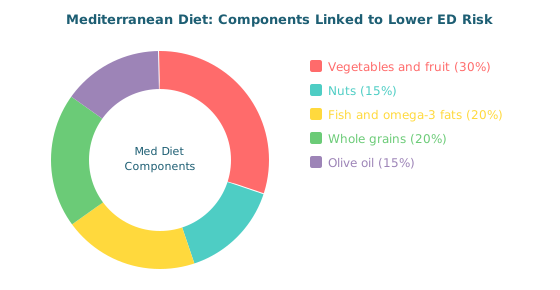
Diet influences erectile function through vascular health, body weight, and inflammation. A systematic review and meta-analysis published in PMC in 2025 found that combined diet and exercise interventions reduced the likelihood of ED by 51% (odds ratio 0.49) and significantly raised IIEF-5 scores. The Mediterranean-style diet, rich in vegetables, fruits, nuts, whole grains, and fish, was the most studied pattern and showed the clearest association with lower ED risk.
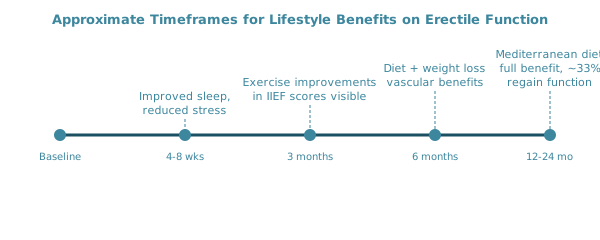
Earlier clinical trial data from Esposito and colleagues showed that around one-third of obese men with ED who adopted Mediterranean-style eating combined with regular exercise regained satisfactory sexual function within two years. More recent research confirms the picture: men who consumed nuts more than twice a week had 46% lower odds of ED compared to those who did not, and daily vegetable consumption was associated with a 53% lower odds of ED.
The mechanism is vascular. A diet high in ultra-processed foods, refined sugar, and saturated fat promotes endothelial dysfunction and reduces nitric oxide production. Swapping these foods out for plant-heavy, anti-inflammatory options tends to improve vascular function over time.
How Much Does Body Weight Matter for Erectile Health?
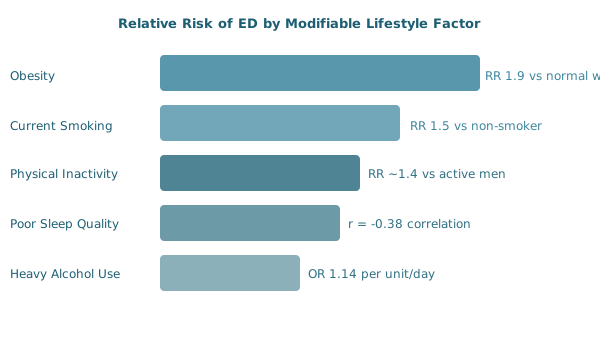
Obesity is one of the strongest predictors of ED. The Health Professionals Follow-up Study, which tracked more than 22,000 men over 14 years, found that obese men had nearly twice the relative risk of developing ED compared to men with a healthy weight (RR 1.9). A 2025 cross-sectional study in Cure us confirmed that body mass index was the single strongest predictor of severe ED in multivariate analysis.
There is a complication worth knowing. A landmark cohort study published in Urology found that baseline obesity predicted a higher risk of ED regardless of weight loss in midlife. This means early weight management is more effective than trying to reverse damage later. That said, weight loss does appear to benefit erectile function through several pathways: it reduces systemic inflammation, raises testosterone levels, and improves endothelial function.
A practical goal supported by the literature is achieving a body mass index below 30 kg/m², alongside a waist circumference under 94 cm, since abdominal fat specifically drives the metabolic disruption most harmful to vascular health.
What Do Smoking and Alcohol Actually Do to Erectile Function?
Smoking is a well-established independent risk factor for ED. Current smokers have approximately 50% higher odds of developing erectile dysfunction than non-smokers, based on pooled data from eight observational studies covering more than 28,000 men. Nicotine and cigarette chemicals damage endothelial cells, reduce nitric oxide synthesis, and accelerate atherosclerosis (the narrowing of arteries), all of which restrict blood flow to penile tissue.
Smoking cessation may improve erectile function, particularly in younger men. Research found significantly reduced time to maximal erection and improved penile tumescence in men who successfully quit, with the proposed mechanism being restoration of endothelial integrity. The earlier in life smoking stops, the greater the potential benefit.
Alcohol is more nuanced. Occasional moderate drinking does not appear to substantially increase ED risk in most studies. However, daily alcohol consumption shows a dose-dependent association with ED, with each unit per day linked to 14% higher odds of the condition. Heavy chronic alcohol use also disrupts testosterone production and damages peripheral nerves over time.
Does Sleep Quality Influence Erectile Function?
This is an area where evidence has grown quickly in recent years. A 2025 prospective study of 249 men with erectile complaints found a significant inverse correlation between poor sleep quality and erectile function scores (r = -0.379, p less than 0.001). Regression analysis confirmed sleep quality as an independent predictor of ED, not simply a marker of other problems like obesity or depression.
The biology makes sense. During deep sleep, men experience nocturnal erections that maintain tissue oxygenation in penile structures. Sleep is also when the body produces the most testosterone. A separate Mendelian randomization study published in Archivum Medicum Sciences in 2025 supported a causal link between poor sleep traits and ED risk, moving the evidence beyond mere correlation.
Animal studies in rats have shown that chronic sleep deprivation leads to increased oxidative stress, endothelial dysfunction, and even irreversible fibrotic tissue changes. It is worth noting this is animal-model data; human clinical evidence for the same irreversible changes is still limited. But the vascular and hormonal disruption from poor sleep in humans is well-established.
Can Stress and Mental Health Changes Reduce ED Risk?
Psychological factors account for a significant proportion of ED cases, particularly in younger men. A 2025 multicenter prospective study found that depression, poor sleep quality, and sexual dysfunction were tightly correlated in men seeking treatment, with depression independently worsening erectile scores. The Mendelian randomization study cited earlier also found depression to have a causal role in the development of ED.
Chronic stress activates the sympathetic nervous system, which constricts blood vessels and works directly against the parasympathetic activity needed for erections. Elevated cortisol over time also suppresses testosterone production. Stress management practices such as regular exercise, social connection, structured relaxation, and professional psychological support can reduce both cortisol burden and the anxiety-performance cycle that worsens ED once it appears.
It is worth being honest about limits here. Lifestyle changes address modifiable risk factors well. But when anxiety about sexual performance becomes self-reinforcing, or when depression is the primary driver, professional psychological support tends to produce faster and more reliable results than lifestyle change alone.
When to Consider Prescription Treatment Options
Lifestyle changes address modifiable risk factors and, in some men, can meaningfully improve or prevent ED. But they are not a substitute for medical evaluation, and they work more slowly than pharmacological treatment. For men with moderate-to-severe ED, or where an underlying condition such as diabetes, hypertension, or low testosterone is driving the dysfunction, prescription options often play an important role alongside lifestyle work.
Prescription Oral Medications for ED: Overview
Several prescription PDE5 inhibitors, which work by increasing blood flow to penile tissue, are used clinically for erectile dysfunction. These include sildenafil-based and tadalafil-based formulations available in various doses, as well as combination products.
- Products containing sildenafil or tadalafil in varying dosage strengths may be prescribed depending on patient needs and comorbidities.
- Combination products pairing a PDE5 inhibitor with dapoxetine (a short-acting serotonin reuptake inhibitor used for premature ejaculation) are available in several regions. Note that dapoxetine is approved in several countries but is not currently FDA-approved in the United States.
- Prescription options should only be started under medical supervision, as they interact with nitrates and certain cardiovascular medications.
If you are looking for information on specific formulations available at Pillsplace, including Vidalista black 80 mg, Super P Force, Tadalista 20 mg, or Fildena Double 200mg, you can explore the product pages for full prescribing information.
The Bottom Line
The evidence is clear that lifestyle is not a peripheral factor in erectile dysfunction; it is central to it. Here is what the research supports:
- Aerobic exercise at moderate-to-vigorous intensity, four or more times a week, improves erectile function scores in clinical trials.
- A Mediterranean-style diet, particularly one rich in vegetables, nuts, fish, and whole grains, is associated with meaningfully lower ED risk.
- Obesity is a strong independent predictor of ED, and early weight management is more effective than later intervention.
- Smoking damages penile vascular health; quitting may restore some function, especially in younger men.
- Poor sleep quality is now recognised as an independent predictor of ED, not merely a secondary marker.
- Chronic stress and depression disrupt the hormonal and vascular systems that support normal erectile function.
None of these changes works overnight. But their effects compound, and they benefit your overall cardiovascular health at the same time. If symptoms are persistent or causing distress, a conversation with a healthcare provider is always the right next step.
FAQs.
Can lifestyle changes reverse existing erectile dysfunction?
How much exercise helps reduce ED risk?
Does quitting smoking improve erectile function?
Does poor sleep cause erectile dysfunction?
When should someone see a doctor about ED?
References
- Amegroups Editorial Office. “Can lifestyle modification affect men’s erectile function?” Translational Andrology and Urology, 2014.View source
- Pinto A, et al. “Association between improved erectile function and dietary patterns: a systematic review and meta-analysis.” PMC / Journal of Men’s Health, 2025.View source
- Esposito K, et al. “Lifestyle modifications and erectile dysfunction.” PMC, 2015.View source
- Gerbild H, et al. “Effect of aerobic exercise on erectile function: systematic review and meta-analysis of randomized controlled trials.” PubMed / Journal of Sexual Medicine, 2023.View source
- Kataoka T, et al. “Exercise, Erectile Dysfunction and Co-Morbidities.” PMC, 2024.View source
- Bacon CG, et al. “A prospective study of risk factors for erectile dysfunction.” PubMed / Journal of Urology, 2006.View source
- Esposito K, et al. “Sexual dysfunction and the Mediterranean diet.” PubMed / European Urology, 2007.View source
- Ramírez R, et al. “Erectile dysfunction and cardiovascular risk factors in a Mediterranean diet cohort.” PubMed / Internal Medicine Journal, 2016.View source
- Ghantous I, et al. “Impact of Obesity, Smoking, and Alcohol on Erectile Dysfunction: A Cross-Sectional Study of Lebanese Men.” Cureus, 2025.View source
- Derby CA, et al. “Modifiable risk factors and erectile dysfunction: can lifestyle changes modify risk?” PubMed / Urology, 2000View source
- Guo W, et al. “Smoking and Risk of Erectile Dysfunction: Systematic Review of Observational Studies with Meta-Analysis.” PMC / PLOS ONE, 2013.View source
- Nebioğlu A, et al. “Impact of sleep quality and chronotype on self-reported erectile function in young adults.” PMC / International Journal of Impotence Research, 2025.View source
- Zhang Y, et al. “Causal relationship between sleep traits and erectile dysfunction: evidence from Mendelian randomization analysis.” PMC / Archivum Medicum Sciences, 2025.View source
- Zhang Y, et al. “Chronic sleep deprivation induces erectile dysfunction through increased oxidative stress, apoptosis, endothelial dysfunction, and corporal fibrosis in a rat model.” PubMed / Journal of Sexual Medicine, 2024.View source
- Eker A, et al. “Association between sleep quality, depression, and sexual dysfunction in men seeking treatment for sexual dysfunction: a multicenter prospective analysis.” Journal of Men’s Health, 2025.View source
- Shim JS, et al. “Insights into modifiable risk factors of erectile dysfunction, a wide-angled Mendelian Randomization study.” PubMed / Journal of Advanced Research, 2024.View source